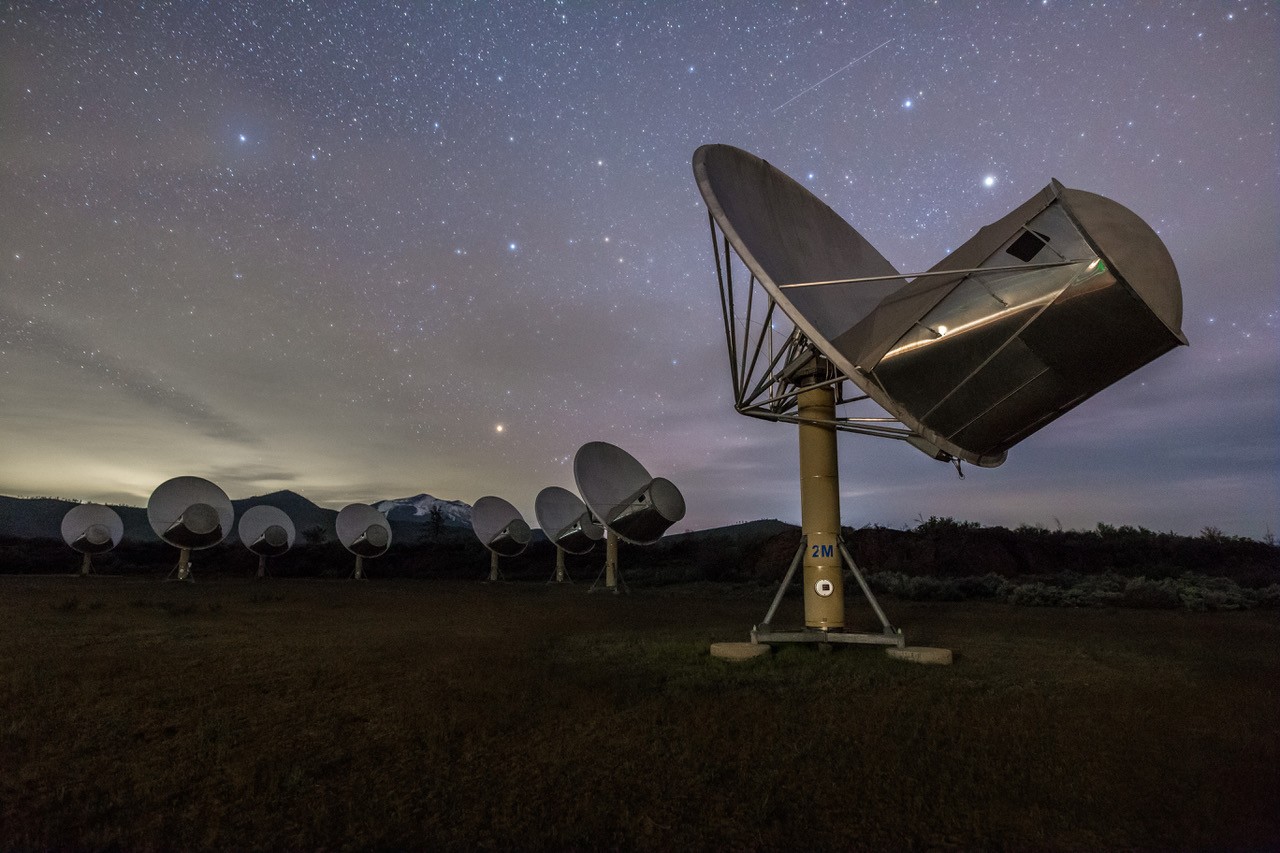

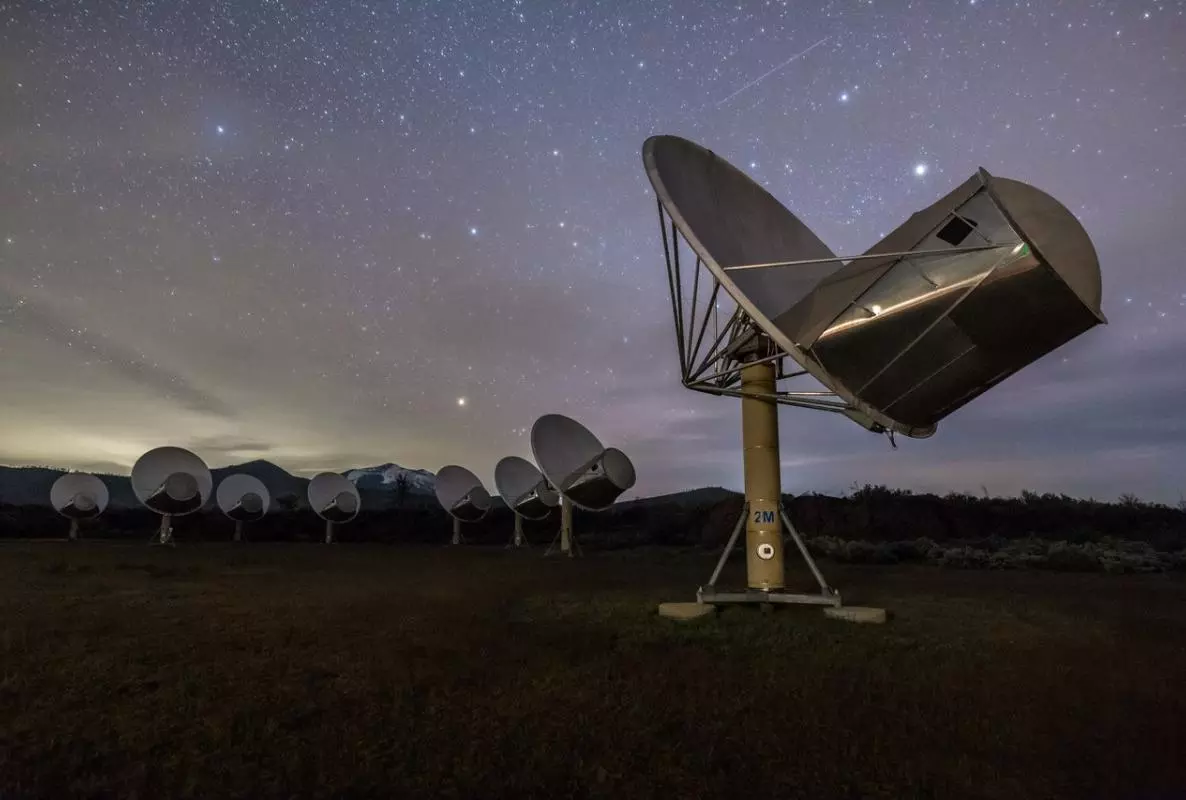
The Allen Telescope Array (ATA) is the first radio telescope designed specifically for SETI, the search for extraterrestrial intelligence. It is located at the Hat Creek Radio Observatory in northern California, roughly 300 miles north of San Francisco and just north of Lassen Peak.
In its current form, the ATA is made up of 42 antennas, each about 6 meters in diameter. The array is designed so it can support dedicated SETI observing while also carrying out advanced radio astronomy research.
What makes the ATA distinctive
The ATA operates across a wide frequency range of roughly 1 to 14 GHz, which lets it observe large swaths of sky and spend substantial time on SETI searches rather than treating SETI as a secondary use of the instrument. Its strengths are a wide field of view, flexibility, and the ability to run SETI work alongside other science programs.
Examples of SETI observing programs
Past ATA programs have included:
targeting star systems identified by the Kepler Space Telescope, especially systems with habitable zone candidate planets
surveying regions near the Milky Way’s Galactic Center, where stellar density is highest
focusing on nearby potentially habitable stars within about 1,000 light-years, continuing a legacy that extends from Project Phoenix (1995 to 2004)
investigating signals from the interstellar object ʻOumuamua and from the direction of the famous 1977 “Wow!” signal
Recent upgrades
The ATA has undergone upgrades that include more sensitive receivers and expanded capabilities. These improvements support new SETI observing programs that take advantage of the upgraded hardware.
How this connects to Breakthrough Listen
Breakthrough Listen works with multiple observatories to widen the search for technosignatures. The ATA is a natural fit because it was built for SETI and can dedicate time to SETI observations while still supporting other radio astronomy.
A clear example of this connection is Breakthrough Listen’s targeted search related to the “Wow!” signal, which used observations from both the Allen Telescope Array and the Green Bank Telescope on May 21, 2022, including a period of simultaneous observing.